
Reusable prompt building blocks
Study the original prompt as functional segments, then reuse the pieces that fit your own image.
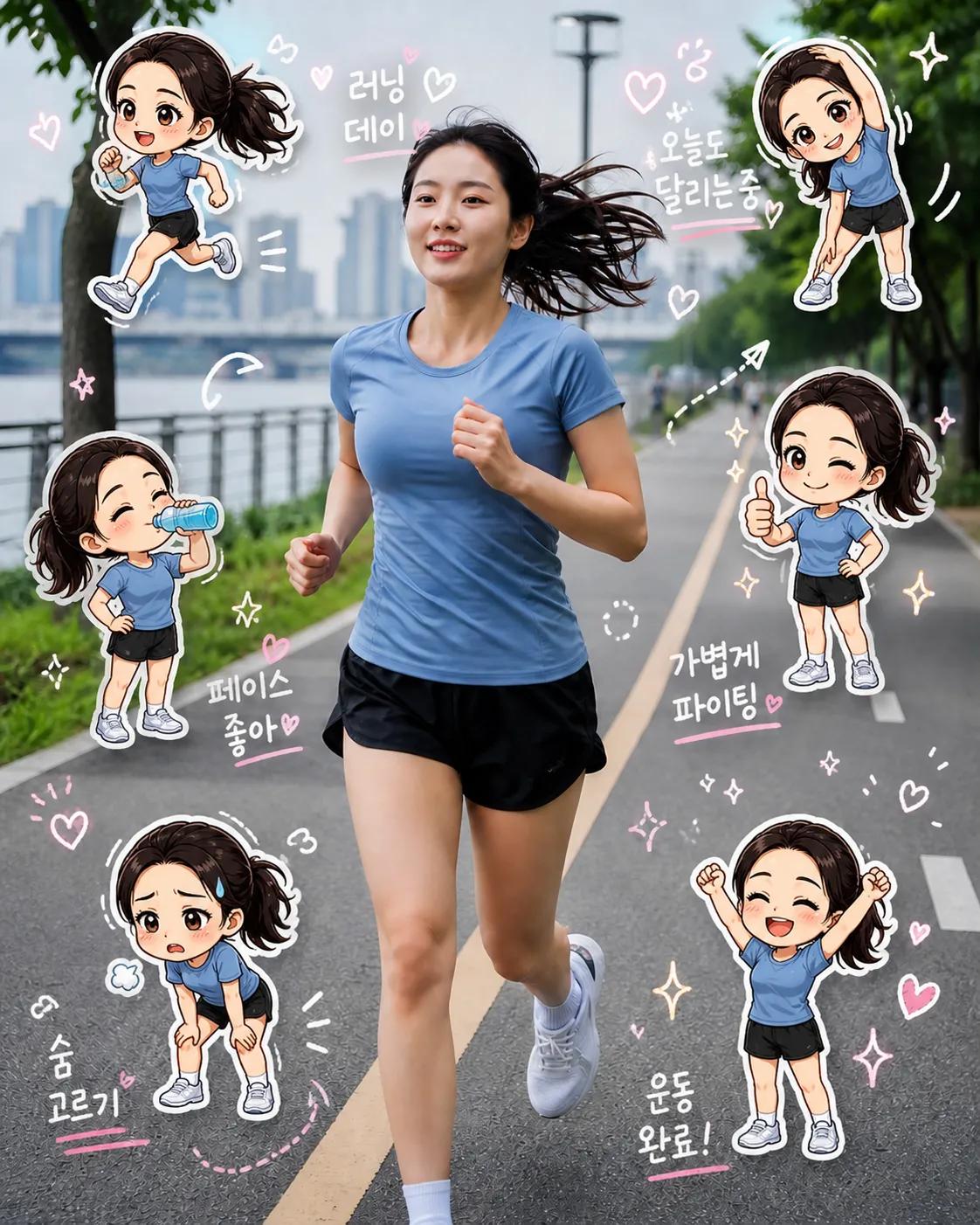
Preserve the original person’s identity, face, hairstyle, hair color, outfit, body proportions, pose, lighting, and background. Do not alter facial features or turn the subject into a full illustration—maintain a realistic photo look.
Ensures the real person remains unchanged and photorealistic.
Analyze the scene as a fitness/running lifestyle moment.
Establishes the contextual activity and setting.
Add 5–8 chibi mini clones of the same person around the subject, designed in a consistent kawaii sticker style (big head, small body, large expressive eyes, clean digital finish). Each clone must clearly resemble the real person (same hair, outfit, colors). Render each chibi as a sticker with white outlines, soft shadows, and a slightly floating effect. Add light hand-drawn doodles (hearts, sparkles, arrows, motion lines, circles) in white with subtle pink accents, keeping a clean scrapbook diary feel.
Defines the visual aesthetic for chibis and doodles.
Composition: keep the real person as the central focus, surrounded by chibi stickers and doodles. Arrange them around the subject and edges without covering the face or main body.
Controls layout to prioritize the real subject while integrating decorations.
Design each chibi with different running-related actions and emotions: jogging, stretching, drinking water, feeling tired, cheering, giving thumbs up, celebrating completion. Ensure all poses are unique and contextually relevant. Include 5–8 short handwritten-style phrases matching a fitness mood (cute, energetic, encouraging). Use mostly white text with slight pink highlights and small decorative marks.
Specifies the chibi poses, emotions, and added text content.
The result should feel like a polished, playful, high-resolution social media lifestyle diary image—clean, balanced, and visually rich without clutter.
Sets final output expectations for polish and resolution.